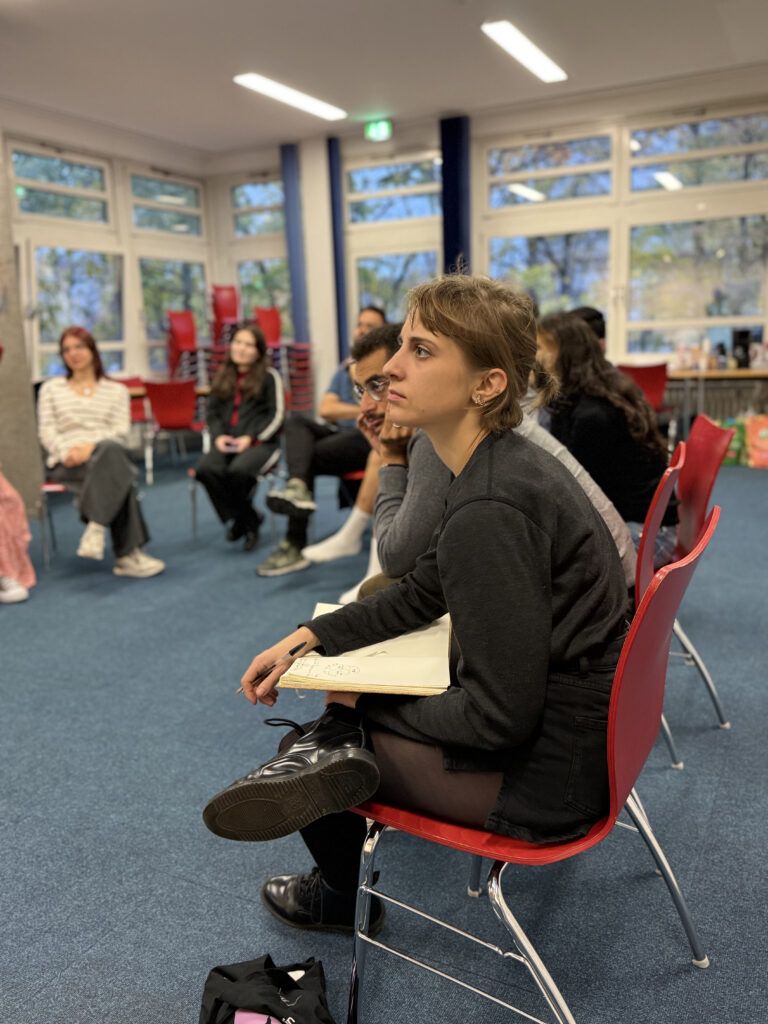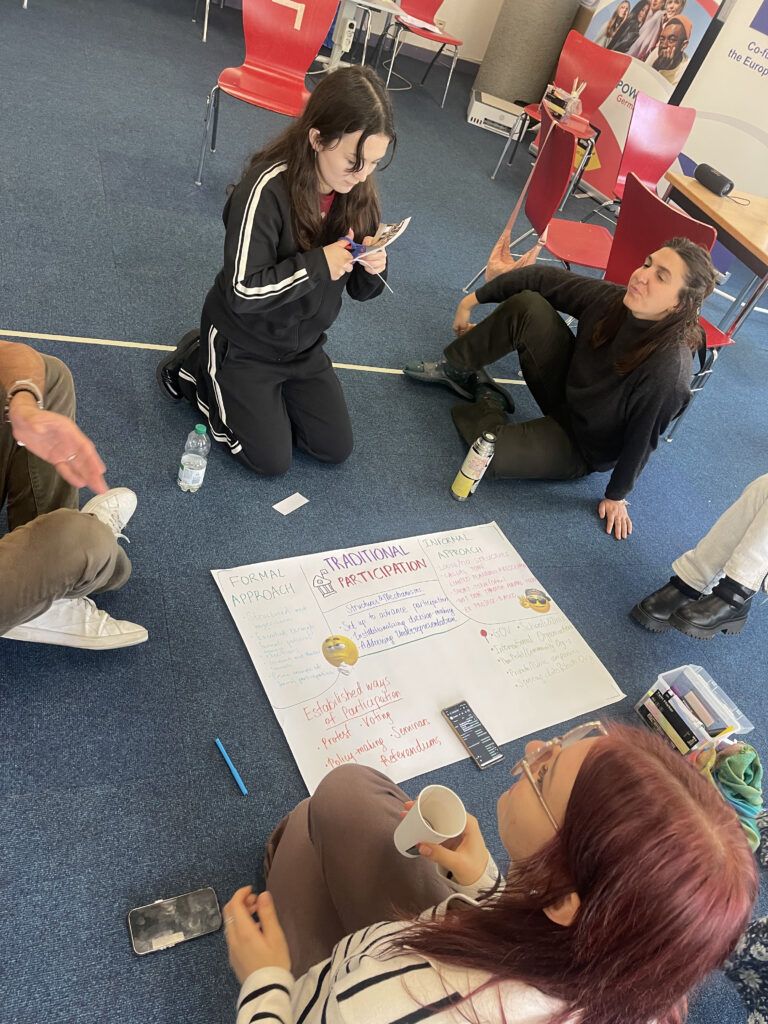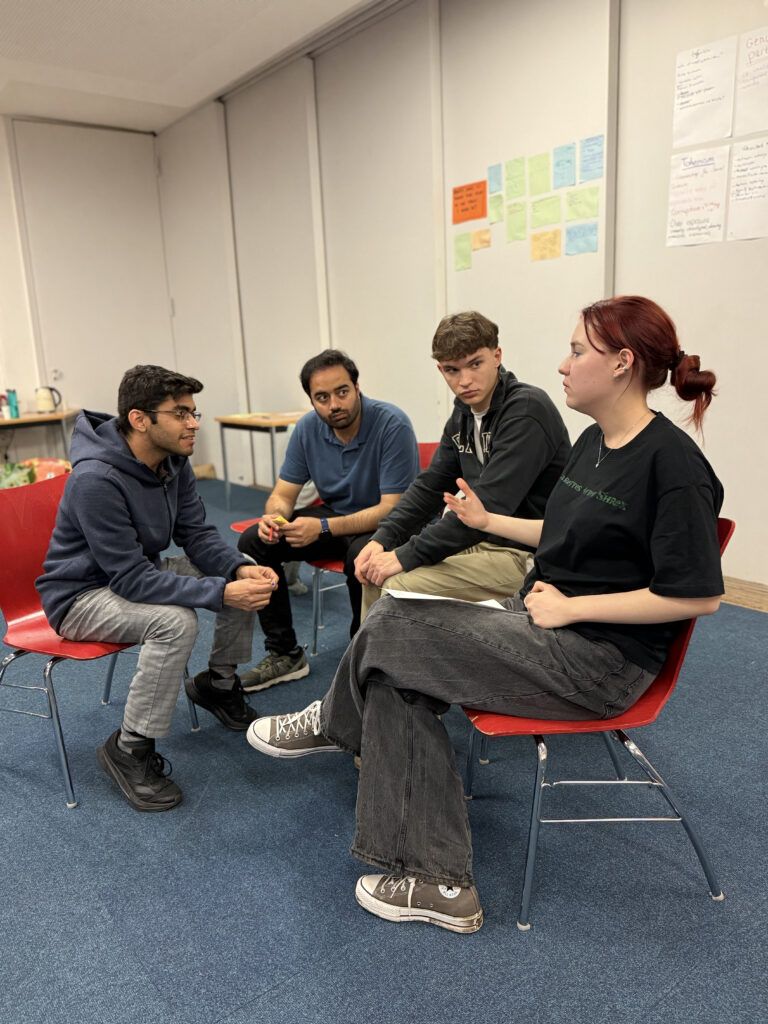

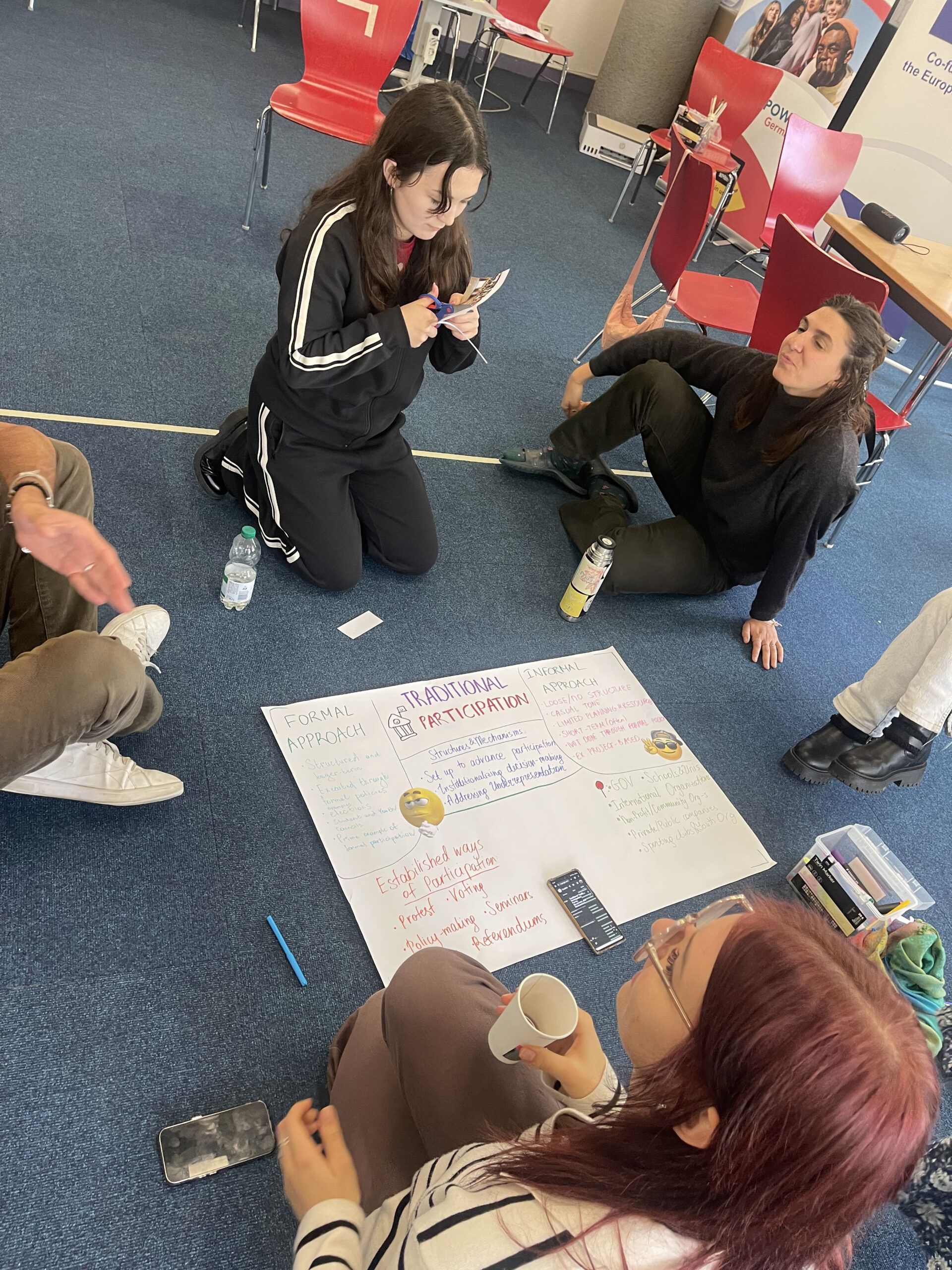
Organised by Youth Power Germany e.V., the training formed part of the Erasmus+ project Beyond Tokenism: Youth Leading Inclusion and served as a testing ground for the Combat Tokenism Toolkit before its wider European dissemination.
The training brought together practitioners from a diverse range of youth centres, cultural initiatives, and social organisations across Berlin. While all participants were already engaged in inclusion work, the training invited them to pause and reflect on a critical question: when does inclusion become merely symbolic, and how can youth work move beyond visibility toward genuine shared power?
Over the five days, participants engaged in a structured learning journey that combined theory, dialogue, creative methods, and personal reflection. The goal was not only to define tokenism but to recognise how it manifests in everyday practice and to develop concrete strategies to prevent it.
The first day focused on building trust and establishing a safe learning environment. Through activities such as Human Bingo, creative icebreakers, and the co-creation of a group agreement, participants defined shared values of respect, openness, and confidentiality. This foundation enabled honest and sometimes challenging conversations throughout the training.
The second day explored how tokenism appears in youth work settings. Through case studies and group analysis, participants examined how even well-intentioned initiatives can reproduce exclusion when power remains concentrated. Exercises such as the Privilege Ladder and Power Mapping made visible how access, voice, and decision-making authority are distributed within organisations. These sessions often triggered emotional responses, as participants connected abstract concepts to their own positions and experiences.
On the third day, the focus shifted from diagnosis to design. Using Hart’s Ladder of Participation, participants mapped real examples of youth involvement and reflected on the difference between consultation, partnership, and youth-led processes. The Co-Creation Canvas then enabled small groups to design activities where young people are not beneficiaries but co-designers. Many participants described this as a turning point, where inclusion stopped being a principle and became a practice.
The fourth day was dedicated to applying the toolkit in concrete ways. Through the Inclusion Canvas, participants developed project ideas aimed at fostering equitable participation and avoiding tokenistic patterns. Peer feedback sessions transformed the room into a collaborative laboratory of ideas, with participants supporting each other in refining and strengthening their approaches.
The final day focused on reflection and future action. Participants translated their learning into personal and organisational action plans and articulated concrete commitments for change. Activities such as the “Letter to Myself” and the Youthpass reflection helped anchor learning on both a professional and personal level, concluding with a symbolic ceremony acknowledging the competences developed.
The group dynamics were a key strength of the training. Participants described the atmosphere as open, supportive, and intellectually stimulating. The diversity of organisational backgrounds enriched discussions and allowed tokenism to be explored from multiple angles, from cultural representation to decision-making structures and funding priorities.
Evaluation feedback confirmed that the training was highly relevant, emotionally impactful, and practically useful. Participants reported a deeper understanding of tokenism and an increased ability to recognise its subtle forms in their own work. The interactive methodologies, particularly the exercises on power, privilege, and participation, were highlighted as especially transformative.
The testing of the Combat Tokenism Toolkit itself was a central outcome of the pilot. Participants praised the clarity, structure, and adaptability of the manual, while also offering constructive suggestions to improve facilitation guidance, include more real-life examples, and strengthen intercultural sensitivity. This feedback now directly informs the refinement of the toolkit for its European rollout.
From the trainers’ perspective, the Berlin pilot demonstrated that practitioners are not only ready but eager to move beyond symbolic inclusion toward more ethical, participatory, and empowering models of youth engagement. The emotional depth of the process required careful facilitation, but it also enabled profound learning and honest dialogue.
The impact of the training extends beyond the five days in Berlin. Participants expressed strong motivation to integrate the toolkit into their organisations, initiate follow-up workshops, and advocate for more meaningful participation structures within their local contexts.
The Berlin pilot confirmed that meaningful inclusion is not achieved by inviting young people into existing structures alone, but by reshaping those structures to share power, voice, and ownership. In this sense, the training did not simply teach about tokenism — it modelled what non-tokenistic, participatory learning can look like in practice.