
The training was designed not only to introduce participants to the concept of tokenism, but to fundamentally reshape how they understand power, participation, and responsibility in youth work practice.
While most participants were already committed to youth inclusion, many had never encountered the term tokenism before, or had only a vague sense of what it meant. Over the course of the training, this abstract concept became tangible, personal, and deeply connected to their everyday professional realities.
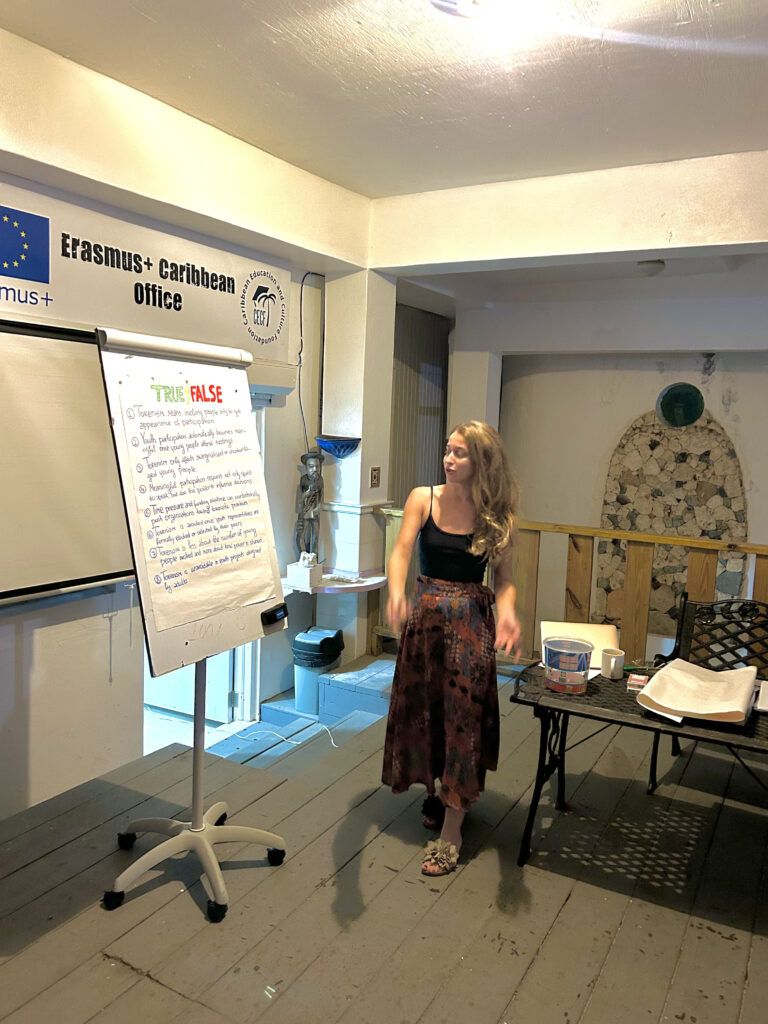
The training created a structured yet safe space where participants could critically examine how youth participation is designed, facilitated, and limited within organisations — often unintentionally. By working through theoretical models, reflective exercises, scenario analysis, and co-creation processes, participants were invited to look beyond good intentions and focus on real impact.
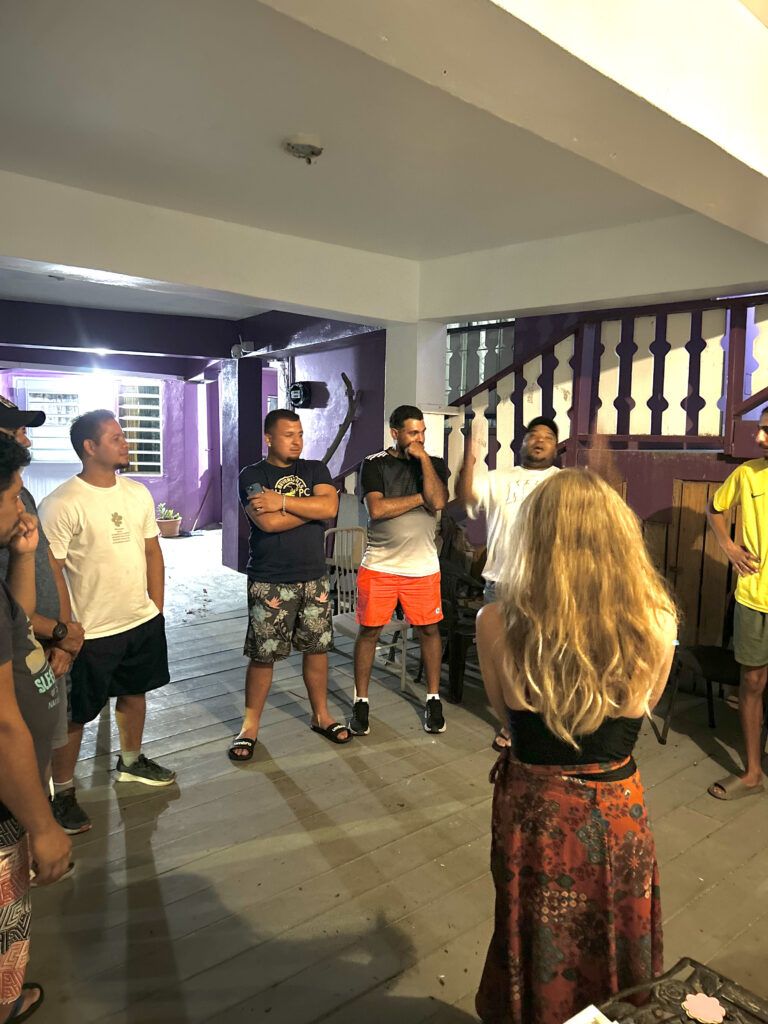
From the very first day, emphasis was placed on trust, openness, and mutual respect. Ice-breakers, team-building activities, and the creation of a shared “safe space agreement” helped establish an atmosphere in which participants felt secure enough to share personal experiences related to power, privilege, and representation. This relational foundation proved essential for the depth of reflection that followed.
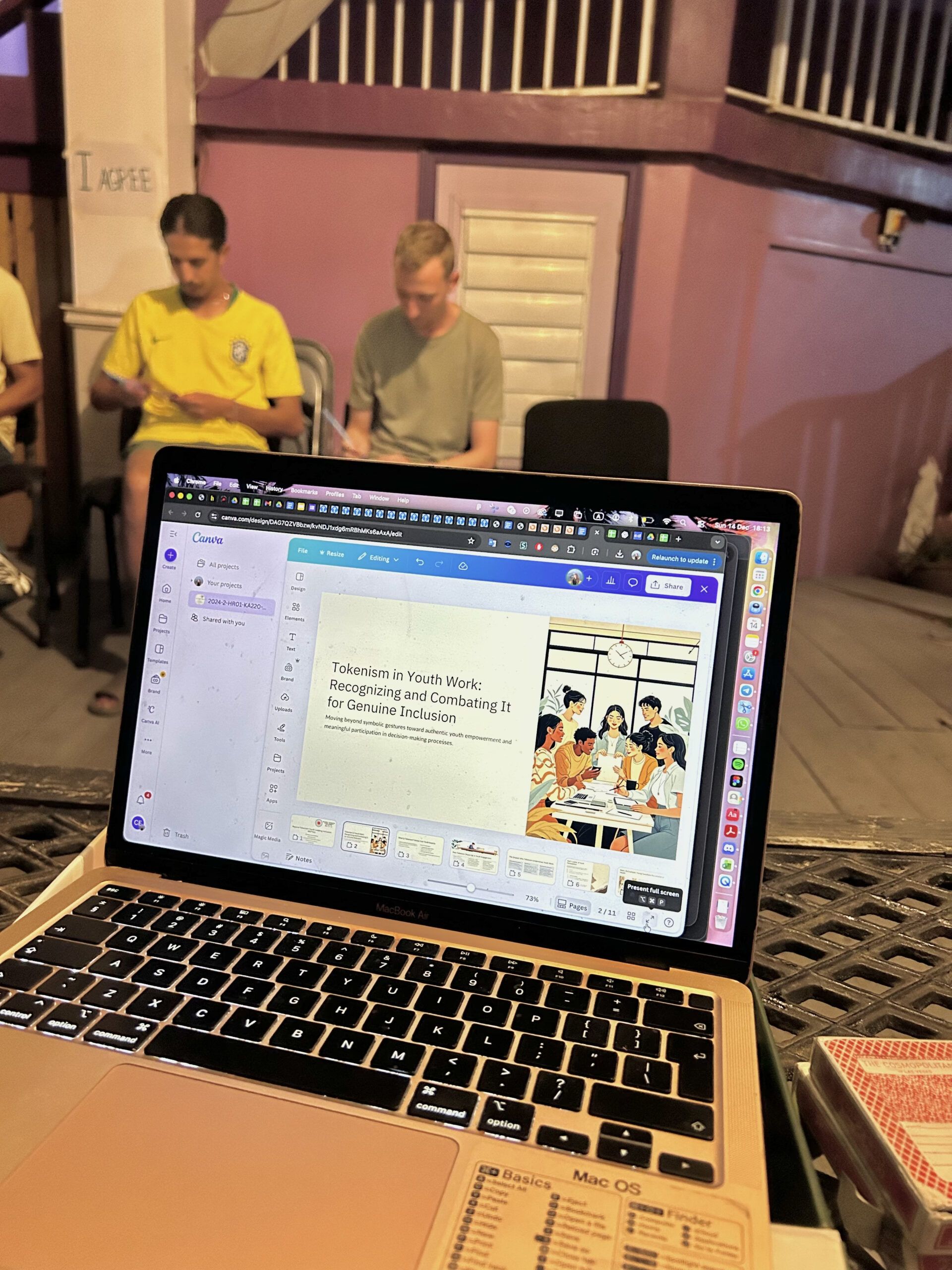
As the training progressed, participants engaged with participatory models of youth engagement, rights-based frameworks, and the project’s analytical tools, including reflection questions, planning checklists, and action-planning templates. Through scenario-based discussions, role analysis, structured positioning exercises, and policy review sessions, participants learned to recognise subtle but persistent forms of tokenism embedded in organisational routines, decision-making structures, and participation mechanisms.
One of the most transformative aspects of the training was the shift from conceptual understanding to practical application. Participants were not only asked to identify tokenistic patterns but also to redesign their own practices. Through co-creation activities, small-group collaboration, and action-planning exercises, they developed concrete strategies to move from symbolic inclusion toward authentic youth partnership.
Participants reported significant changes in how they understand their own professional roles. Many described a growing awareness of how power operates in everyday interactions, how privilege shapes whose voices are heard, and how even well-intentioned structures can reproduce exclusion. At the same time, the training strengthened participants’ confidence to engage with these sensitive topics openly — both with colleagues and with young people themselves.
The group dynamics played a crucial role in this learning process. The highly collaborative and cohesive atmosphere enabled participants to learn from one another, challenge assumptions, and jointly construct meaning. The diversity of professional backgrounds enriched discussions and allowed participants to see how tokenism manifests differently across organisational contexts while remaining structurally similar.
By the end of the five days, participants had not only gained knowledge but had developed new professional capacities. They left with an enhanced ability to critically assess policies and practices, design inclusive participation processes, safeguard ethical standards, and support young people as genuine partners rather than symbolic participants.
Evaluation feedback confirmed that the training content was perceived as relevant, applicable, and valuable. Participants particularly appreciated the interactive methodologies, hands-on exercises, and opportunities for reflection and co-creation. Many expressed a desire for longer sessions on complex topics such as power analysis and participation models, as well as follow-up exchanges and continued support to sustain the learning process beyond the training itself.
The Sint Maarten pilot training demonstrated that addressing tokenism is not simply about learning a new concept — it is about changing how organisations think, decide, and act. It showed that meaningful youth participation requires not only inviting young people into spaces but also reshaping those spaces so that youth can genuinely influence outcomes.
As part of the broader Beyond Tokenism project, this local pilot served both as a learning journey for participants and as a testing ground for the project’s toolkit and methodologies. It confirmed that the approach is not only theoretically sound but practically transformative when applied with care, reflexivity, and commitment.
For the youth workers who took part, the training marked the beginning of a longer process of change. Equipped with new tools, deeper awareness, and concrete action plans, they returned to their organisations ready to challenge tokenistic practices and build more ethical, inclusive, and empowering forms of youth participation.