
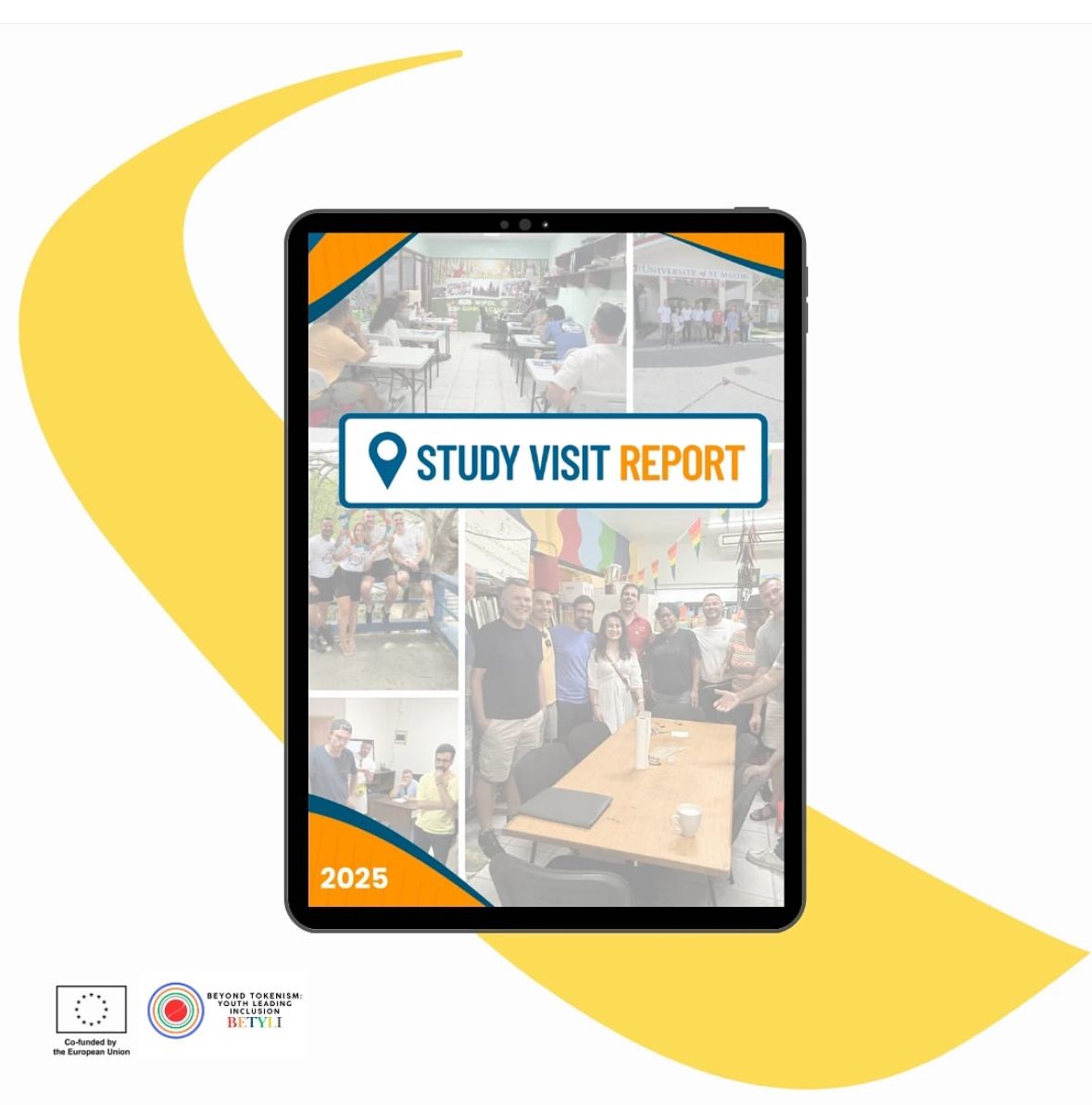
This Caribbean island, part of the Kingdom of the Netherlands, was not only a vibrant and culturally diverse setting for our learning experience but also a deeply relevant site to explore the dynamics of genuine inclusion and the many faces of tokenism. The visit, hosted by the Caribbean Education and Culture Foundation (CECF), offered invaluable perspectives for our project and served as a living classroom of inclusive practices, youth empowerment, and community resilience.
Over four intensive days, we visited six inspiring organizations – each uniquely addressing inclusion through education, activism, social entrepreneurship, and culture. What united them was their commitment to meaningful change and their honesty in confronting the challenges of doing so, particularly in contexts marked by poverty, migration, stigma, and social inequality.
Our journey began at the University of St. Martin, where we met with Dr. Antonio Carmona Báez. He shared how the university prioritizes single mothers, migrants, and low-income students through flexible schedules and inclusive policies – but also honestly acknowledged the infrastructural and societal barriers to deeper inclusion. One key takeaway was their approach to addressing tokenism: not only identifying symbolic gestures but actively equipping educators to dismantle them through structured reflection and training.
At Freegan Food Foundation, inclusion took the shape of social justice and dignity. Born out of crisis after Hurricane Irma, FFF now combats food insecurity with a social store model that empowers rather than patronizes. Their volunteers and staff, many from marginalized backgrounds, taught us how to turn even tokenistic attention into leverage for community benefit and how transparency, intersectionality, and youth decision-making can lead to lasting impact.
We also joined Leaders for Change, an organization addressing homelessness and mental health with fierce determination and almost no governmental support. Their grassroots structure, honesty about tokenistic treatment by authorities, and cross-border collaboration left a lasting impression. Most importantly, they taught us that dignity, confidentiality, and continuous dialogue with youth are essential tools for resisting tokenism and building genuine trust.
Equipex, a women-founded social enterprise, showed us how entrepreneurship and empowerment can go hand in hand. By training and employing single mothers in digital marketing, they exemplify inclusion in the workforce. Their founder’s openness about navigating tokenism during their early days and how they strategically turned it into visibility and partnerships was both candid and inspiring.
At Freedom Fighters SXM, we experienced a deep connection between culture, agriculture, and empowerment. Rooted in Rastafarian values, this organization blends community work, organic farming, and youth leadership with a commitment to inclusion that resists commodification. Their Ital Shack is more than a restaurant it is a symbol of sustainable and culturally grounded resistance to superficial inclusion.
We painted classrooms at St. Maarten Academy alongside students, teachers, and families during the Open Door Festival. This hands-on action reflected the school’s strong commitment to participatory education. Through student governance, civic activities, and community service, they offer a compelling model of how schools can authentically engage young people and avoid tokenistic practices by giving them real agency.
This study visit was not just an observation it was an immersion. It challenged us to examine our own practices, reflect on the hidden layers of tokenism within our systems, and think more critically about how to achieve truly inclusive youth work. The lessons learned in St. Maarten will directly inform our project outputs, from toolkits to trainings, helping ensure they are rooted in lived realities and equipped to support real change.
Inclusion cannot be imported, imitated, or imposed. It must be co-created. And in St. Maarten, we found powerful partners and living proof that beyond tokenism lies the potential for deep, community-driven transformation.