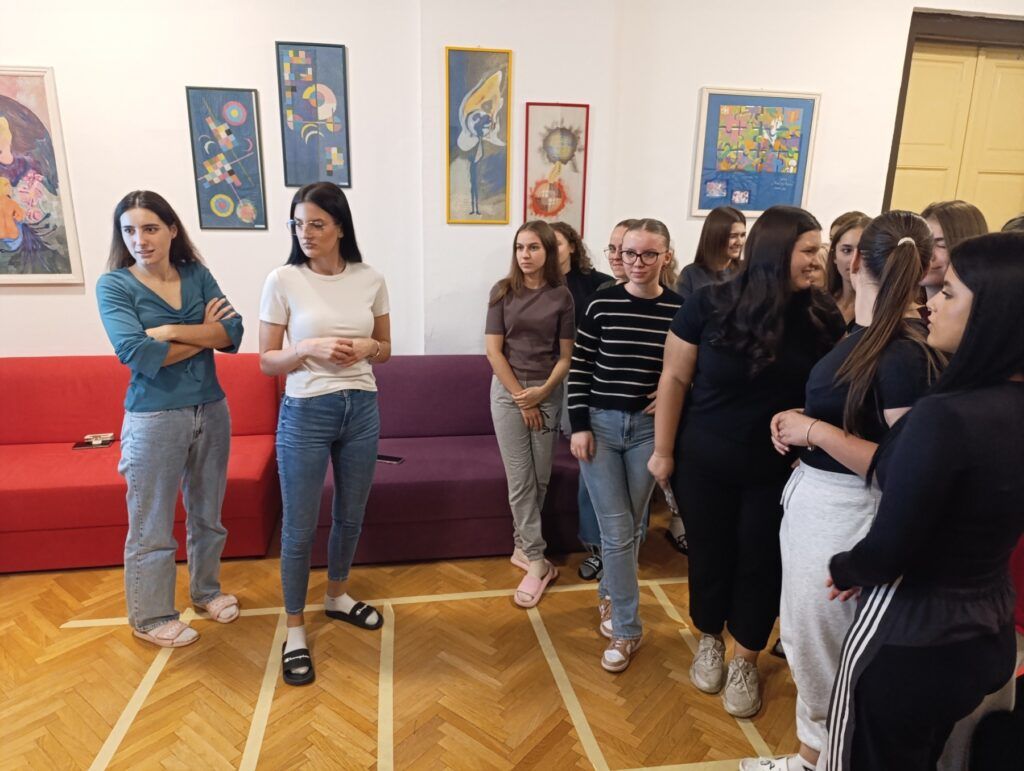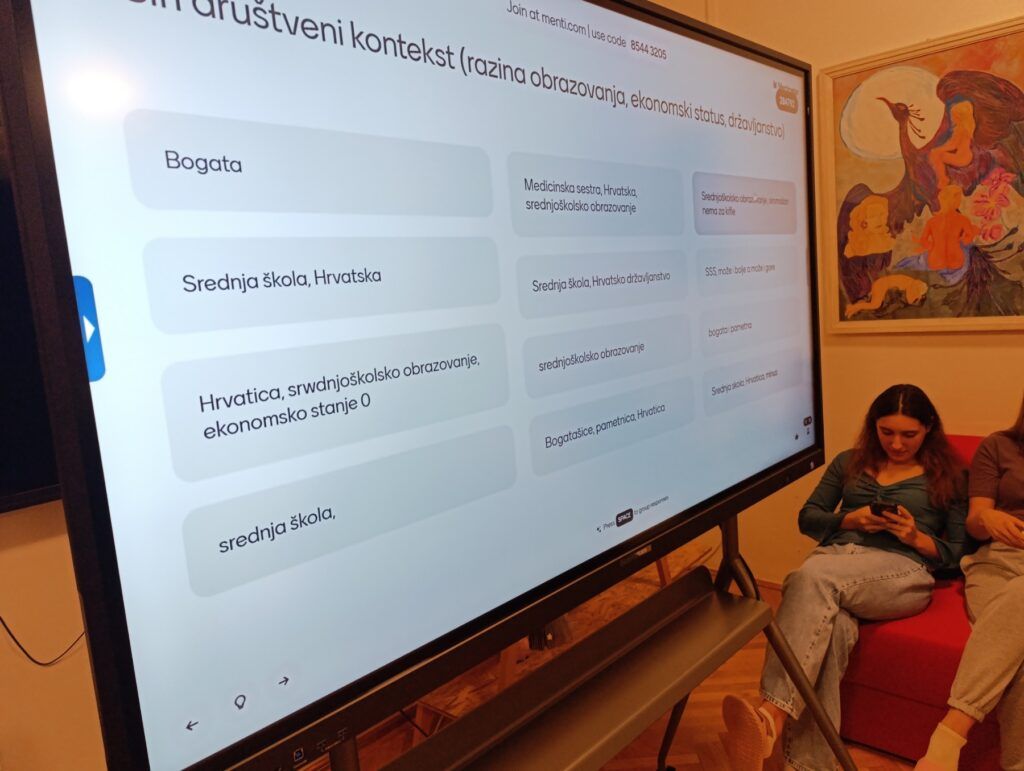

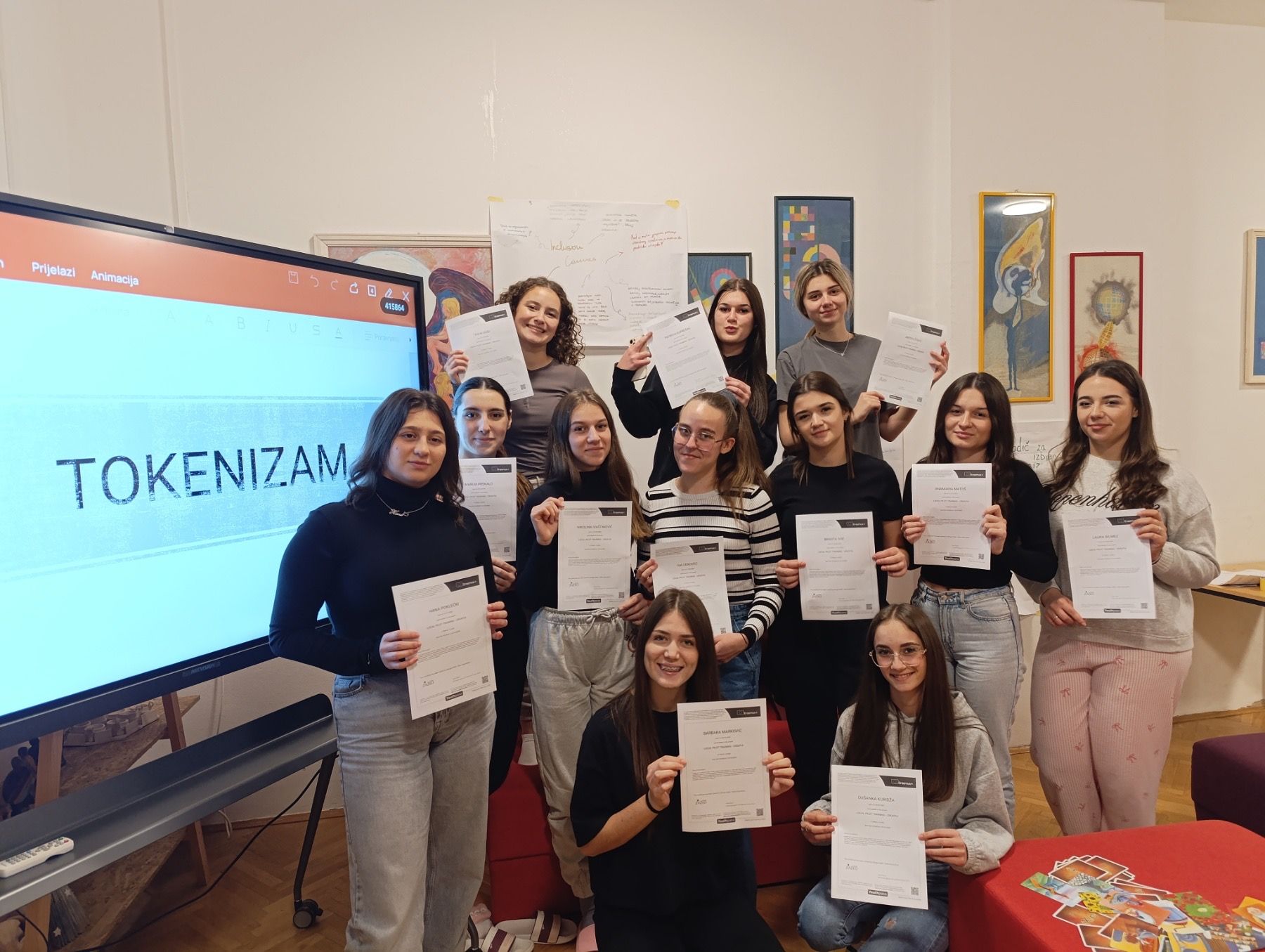
The program was structured as a non-formal educational training led by Prof. Katarina Ruškan Simić, an expert in social pedagogy. Over five days, participants went through a comprehensive program that combined theory and practical exercises.
The first day was dedicated to introductions and an overview of tokenism through team-building activities, where young people established mutual trust through games and discussions and defined the ideal learning environment. The second day focused on analyzing tokenism problems in youth work, where participants learned to recognize examples of tokenism and distinguish them from genuine youth participation.
The third day was devoted to the Ladder of Participation, where young people critically examined tokenistic inclusion through Hart’s Ladder. Participants analyzed different levels of youth involvement, from manipulation to partnership, and developed practical strategies for avoiding tokenism.
The fourth day included laboratories for project creation, where young people worked in small groups on their own project ideas. Peer-to-peer feedback exchange enabled them to receive constructive criticism and share successful examples from their organizations.
The final day focused on personal and organizational action plans. Through workshops, participants developed concrete steps for implementing what they learned in their local communities. The program concluded with an evaluation and writing “Letters to Myself” as a tool for tracking personal development and motivation.
The main outcomes of the training included successful validation of the BETYLI project handbook content, empowering all 20 participants to recognize and avoid tokenism, and creating concrete action plans for implementing their learning. Feedback collected from young participants will be essential for the final shaping of the project methodology.
This training represents an important step in strengthening young people’s capacity to recognize and actively combat tokenistic practices, promoting authentic youth inclusion in decision-making processes that affect them.