
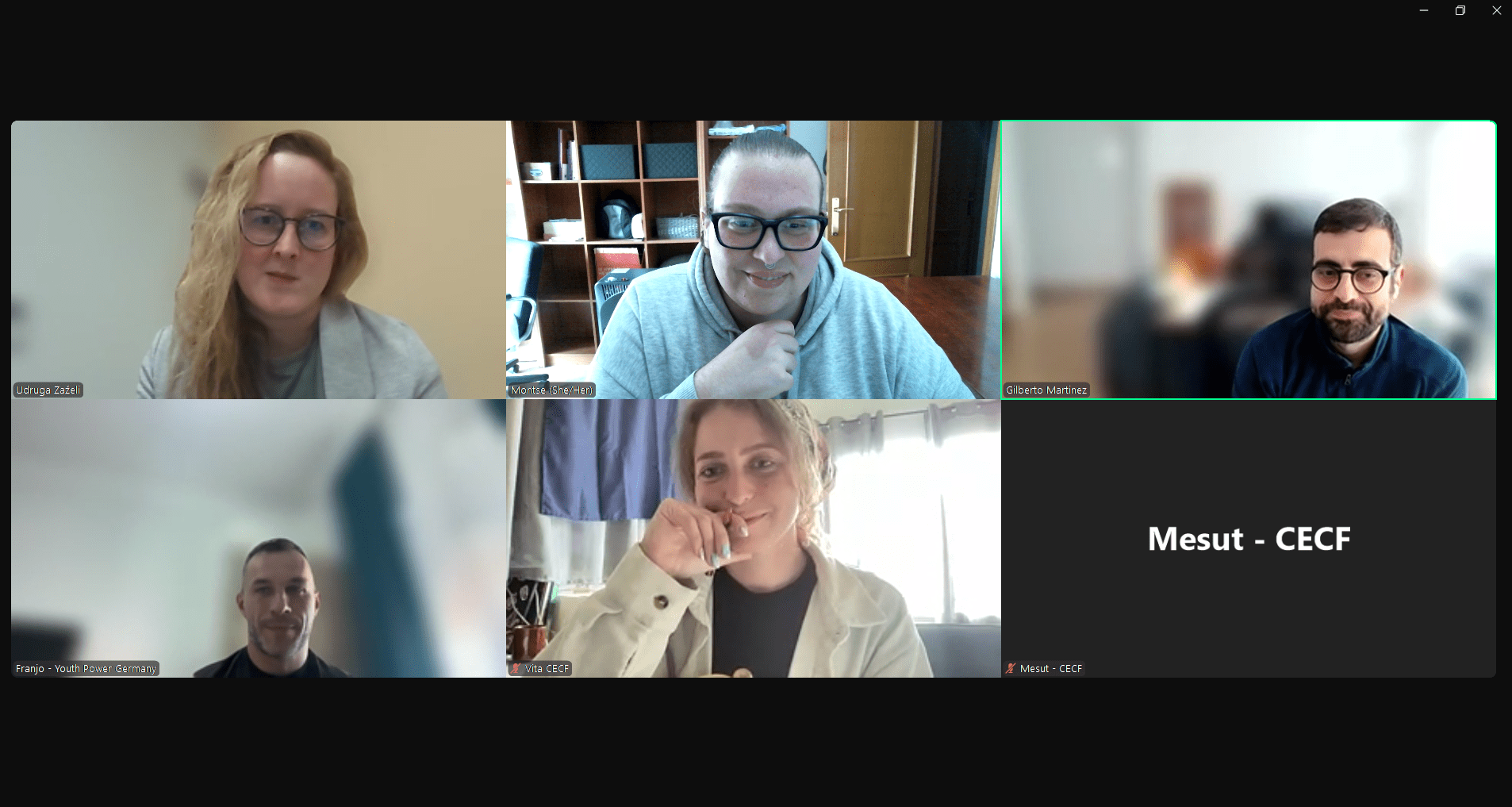
The meeting brought together all partner organizations; Caribbean Education and Culture Foundation (Netherlands), Asociación Pilcrow (Spain), and Youth Power Germany e.V. (Germany) to establish a shared foundation for the 18-month Erasmus+ project focused on tackling tokenism and promoting genuine inclusion in youth work.
The primary goal of this first online meeting was to align expectations, clarify roles, and ensure smooth cooperation across borders. The session opened with welcoming remarks from Udruga Zaželi, highlighting the urgency and relevance of the project in today’s social climate, where inclusion is often reduced to symbolic gestures without real impact. The coordinator emphasized that “Beyond Tokenism” is not just a project, but a call for deeper change in how we engage young people, particularly those from marginalized communities.
Each partner had the opportunity to present their organization’s mission and the specific contributions they will bring to the project. This round of introductions revealed the rich diversity of expertise within the consortium from digital tool development and youth empowerment to anti-racism education and inclusive pedagogy.
During the meeting, the partners discussed the implementation plan and timeline, with a focus on the first two work packages: Project Management (WP1) and Developing Educational Materials to Combat Tokenism (WP2). Special attention was given to internal communication protocols, file sharing systems, and the use of project management tools such as Trello and Google Drive. The consortium agreed to hold monthly check-ins and use a shared calendar to coordinate key deadlines.
One of the key highlights of the meeting was the joint commitment to transparency, horizontal decision-making, and inclusive language throughout all activities. The partners also began defining the common values and working principles that will guide the project—ensuring not just that young people are involved, but that they are meaningfully included as co-creators of change.
The kick-off meeting closed with a sense of momentum and shared responsibility. As one participant said: “It’s easy to talk about inclusion, but we’re here to build something that goes beyond words. That starts today.”